Supplement Discipline: The Documentation Standards That Win on Water Jobs
May 1, 2026
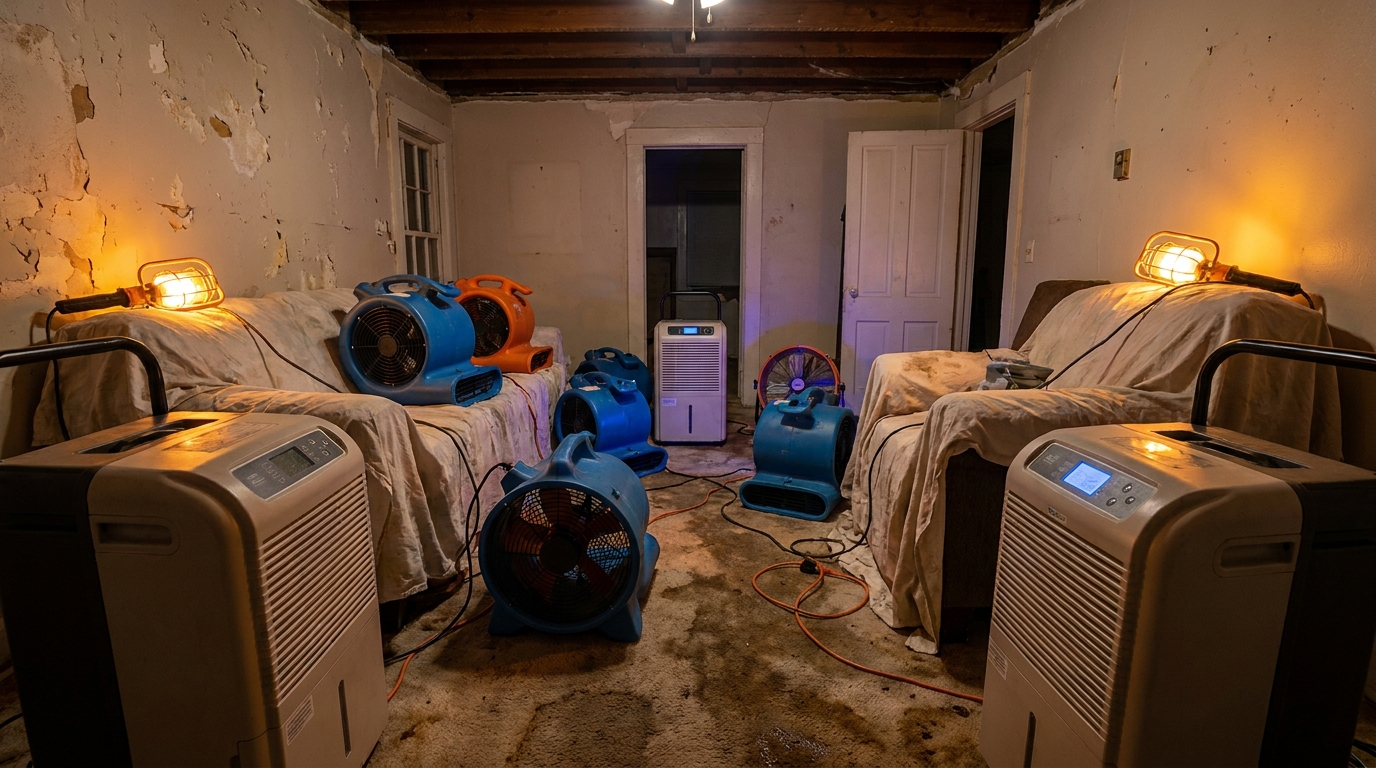
What is supplement discipline in restoration? Supplement discipline refers to the systematic process of identifying, documenting, and successfully billing for additional scope items discovered during a restoration job that were not included in the original estimate. Disciplined supplement workflows consistently recover 8–20% of additional revenue per water job that undisciplined companies leave on the table.
Supplements are simultaneously the most recovered and most forfeited revenue source in restoration. Companies with disciplined supplement workflows routinely capture 75–85% of supplement submissions. Companies without one capture 30–40% — and often don’t know how much they’re leaving behind because the revenue never appeared on a report. This article covers the workflow, the documentation standards, and the honest assessment of when chasing a supplement costs more than it’s worth.
The Supplement Workflow That Wins
Step 1: Identify at the moment of discovery. The most important moment in supplement capture is when additional scope is identified in the field — not in the office three days later. Every technician must be trained to stop when they find a Category 3 condition behind a wall, discover structural damage under the flooring, or identify hidden moisture in a wall cavity. Stop. Document. Do not continue without authorization unless safety requires it.
Step 2: Document before anything changes. The documentation package that wins supplements is built at the moment of discovery. Photographs taken before additional demolition. Moisture readings taken at the discovery site and logged with date, time, and technician name. Notes capturing the exact location and the reason additional scope is necessary. This documentation is credible because it’s contemporaneous. Documentation assembled after the fact — or after the scope has already been completed — is not.
Step 3: Communicate before acting when possible. The sequence that produces the highest supplement approval rate: discovery → documentation → adjuster notification → authorization → proceed. Adjusters who are part of the decision before the work happens are far more likely to approve it than adjusters reacting to a line item on an invoice. The phone call takes three minutes. The disputed invoice takes three weeks.
Step 4: Submit within 48–72 hours. Cycle time matters on supplement approval. A supplement submitted the day after discovery, with a complete documentation package, has a materially higher approval rate than the same supplement submitted two weeks later. The adjuster’s file is fresh, your documentation is contemporaneous, and the scope hasn’t been obscured by subsequent work. Build a workflow rule: all supplements submitted within 48 hours of discovery.
Step 5: Write a scope narrative. The line items are not enough. The adjuster needs to understand why the additional work was necessary — and they often don’t have the technical background to connect a moisture reading to a scope decision. A well-written scope narrative bridges that gap: “Upon removal of drywall in the southwest corner of the living room, Category 3 moisture conditions were identified in the wall cavity consistent with contamination from the adjacent bathroom drain line. IICRC S500 standards require full Category 3 remediation protocol for affected materials. The following additional scope was required…” That paragraph is worth hundreds of dollars in supplement approval.
The Most Commonly Missed Supplement Line Items
Across the restoration companies I’ve worked with, these are the line items most consistently left on the table: additional equipment days beyond the initial estimate (especially on jobs that run long due to elevated humidity or structural complications), contained demolition on jobs where containment was set up but not included in the original scope, insulation removal when wall cavities are opened and wet insulation is discovered, floor covering detach and reset when carpet or LVP must be moved to access subfloor moisture, personal protective equipment for Category 3 or biohazard conditions added mid-job, and dumpster/debris disposal when the volume exceeds the initial estimate. None of these are exotic — all of them get missed regularly in undisciplined operations.
The Cycle-Time vs. Margin Tradeoff
Not every supplement is worth chasing. The honest assessment: supplements under $150–$200 on program work often cost more to pursue than they return, when admin time and portal follow-up are fully loaded. The supplement workflow should have a floor — a minimum dollar threshold below which the line item is absorbed rather than supplemented. Set that threshold by calculating your fully-loaded admin cost per supplement submission. For most operations it’s $75–$125. Any supplement below twice that floor probably isn’t worth the friction.
FAQ
What documentation do I need to successfully win a supplement with an insurance adjuster?
The winning documentation package includes: photographs taken at the moment of discovery (before additional demolition), moisture readings with date/time/location, a scope narrative explaining why the additional work is technically necessary (with IICRC standard references where applicable), specific Xactimate line items with quantities, and a cover letter identifying the original estimate and the nature of the supplement. Missing any of these elements reduces approval probability significantly.
What is a reasonable supplement recovery rate as a percentage of original job value?
Well-managed restoration companies typically recover 8–15% of original job value in approved supplements on water mitigation work. Complex jobs with hidden damage can run higher. Companies below 5% are leaving meaningful money behind. Track this metric by job type and by estimator to find where the leakage is.
How long do I have to submit a supplement?
This varies by carrier and program agreement, but most have a window of 30–90 days from job completion for supplement submission. Some TPA programs have shorter windows — as little as 15 days. Know the specific timeline in each of your program agreements and build your workflow to hit the earliest window, not the latest.
How do I build a supplement workflow my estimators follow consistently?
Make supplement submission a close-out requirement, not an optional step. The job file is not complete until the supplement review has been done and either submitted or documented as not applicable. Assign a specific person — or a part-time supplements specialist — to own the workflow. Track supplement rate and approval rate by estimator monthly. The visibility alone changes behavior.
Mike McCabe is The Profit Detective — a 36-year restoration industry veteran and Fractional Operations Manager at Floodlight Consulting Group.