PDR Files: The $180K Leak Hidden in One Estimator’s Workflow
May 1, 2026
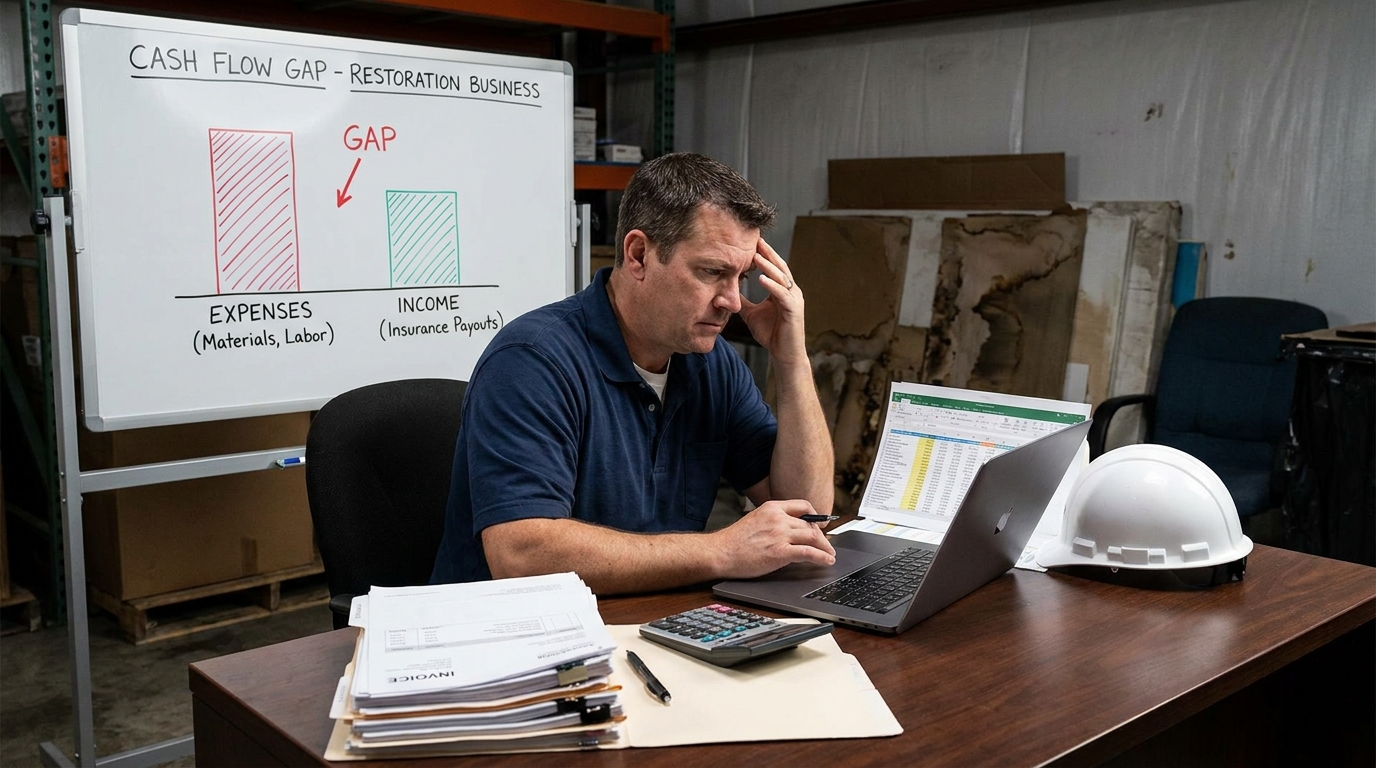
Estimator-driven revenue leaks occur through systematic underpricing habits — consistently missing specific line items, under-scoping labor, failing to charge for equipment at correct rates, or not supplementing discovered additional scope. These leaks compound across every job the estimator touches and are often invisible until job cost variance is analyzed by estimator, not just by job.
The Setup: A Company With Two Estimators and One Confusing Trend
The company was a $3.8M residential and commercial restoration operation with two full-time estimators — call them Estimator A and Estimator B. The owner had noticed that revenue felt softer in recent quarters but couldn’t pin it to a specific cause. Markets were fine. Job volume was consistent. The sales pipeline looked normal. Something was off but nothing obvious was broken.
When I pulled the job cost data and organized it by estimator, the picture came into focus within about twenty minutes. Estimator A’s jobs were closing at an average of 43% gross margin. Estimator B’s jobs were closing at an average of 28% gross margin. Same company, same market, same insurance carriers, same job types — a 15-point margin gap between two people doing ostensibly the same work.
Proving the Pattern: Not One Bad Job, a Distribution
One bad estimator story is easy to dismiss. “He had a tough quarter. Those jobs were complicated.” The way to prove a systematic problem is to look at the distribution, not the average. I pulled every closed job from Estimator B over the prior 12 months — 47 jobs. I sorted them by margin. What I was looking for was the shape of the distribution.
A random-variance problem looks like a normal distribution: some jobs high, some jobs low, most clustered around the average. A systematic problem looks different — the jobs cluster low with a consistent floor. Estimator B’s jobs showed the systematic pattern. Almost no jobs above 35% gross margin. Very few outliers either direction. A tight cluster between 22% and 32%. This wasn’t bad luck. This was a workflow.
What Was Being Missed: Three Line Item Categories
The next step was comparing Estimator B’s estimates against Estimator A’s estimates on comparable job types. Three categories stood out:
O&P (Overhead and Profit). Estimator B was applying O&P only to direct work, not to the full project scope including subcontractor work. This is a common Xactimate habit error — the software allows it to be applied at the total level or selectively, and Estimator B had developed a pattern of applying it selectively in a way that consistently reduced the total by 6–9% of job value.
Equipment billing rates. Estimator B was using the default Xactimate equipment rates without adjustment for the company’s actual equipment cost structure. On jobs with extended drying duration — anything over 5 days — the difference between default rates and the company’s actual billing rates was material. Across 47 jobs, this category alone represented approximately $62,000 in unrecovered revenue.
Supplement capture. Estimator B’s supplement rate — defined as supplements submitted as a percentage of jobs with documented additional scope — was 31%. Estimator A’s was 78%. This wasn’t a capability gap; both estimators were identifying additional scope in the field. Estimator B wasn’t converting the identification into a submitted supplement. The discovered scope was going to work, going to cost, and not going to billing.
The Math: $180K on the EBITDA Statement
Across 47 jobs, the three categories summed to approximately $180,000 in revenue that was earned but not billed. At the company’s overhead structure, roughly $140,000 of that was EBITDA — because the costs were already incurred. The company was already paying to do the work. It just wasn’t collecting for all of it.
On a company this size, $140,000 in EBITDA improvement is approximately a 40% increase in net profit — from a single workflow correction in one employee’s habits. That’s what systematic estimator problems look like when you find them. They’re not dramatic. They’re just consistent and compounding.
The Conversation With the Owner — and the Fix
The owner’s first reaction was to want to fire Estimator B. This is the wrong instinct. Estimator B wasn’t being dishonest. Estimator B had developed habits that were costing the company money — habits that had never been identified, corrected, or even measured. The problem wasn’t the person; it was the absence of a feedback loop.
The fix was three things: a company-wide estimating checklist covering the specific line items most commonly missed (built from Estimator A’s patterns, not from generic best practices), a monthly job cost variance review by estimator that made performance visible on both sides, and a 90-day review of Estimator B’s estimates by a senior reviewer before submission. Not indefinitely — for 90 days, until the habits changed.
At the 90-day mark, Estimator B’s average margin had moved from 28% to 37%. Not to Estimator A’s 43% — there’s a skill gap that takes longer to close — but from costing the company $180K per year to within a manageable range of average performance. The checklist and the feedback loop did what criticism alone never does: they made the specific problem visible enough to correct.
FAQ: Restoration Estimator Revenue Leaks
How do I identify if one estimator is responsible for systematic revenue underperformance?
Pull closed job cost data for the last 12 months and sort by estimator. Calculate average actual gross margin by estimator for comparable job types. A gap of more than 5 points sustained across 15+ jobs is a systematic signal, not random variance. Then look at the distribution of each estimator’s jobs — systematic problems cluster, random variance spreads.
What line items do restoration estimators most commonly miss or underprice?
The most common: O&P not applied to full project scope, equipment billing rates set below company cost structure, labor hours underestimated for specific job types, supplement scope not converted to submitted supplements, and final billing line items (equipment demobilization, final materials) not included at closeout. These categories compound — an estimator missing three of five consistently is a significant margin problem.
How should I run job cost variance analysis by estimator?
Pull all closed jobs by estimator for a trailing 12 months. Calculate actual gross margin (revenue minus direct costs) for each job. Group by job type to control for complexity differences. Calculate average and median margin by estimator. Sort each estimator’s jobs from highest to lowest margin and look at the distribution shape. Present the results side by side. The gap, if it exists, is usually obvious within the first view.
What’s the right way to address chronic underpricing with an estimator without losing them?
Lead with data, not judgment. Show the specific line item categories where the pattern shows up — not “your estimates are too low” but “O&P is being applied at this rate on your jobs vs. this rate on comparable jobs, and here’s the revenue difference.” Build a checklist from the gap categories and use it as a workflow tool, not a performance improvement document. Follow up with 90-day estimate review before the habits shift.
How much revenue does a typical restoration estimator workflow gap cost per year?
It scales with volume. An estimator handling $1.5M in annual job volume with a systematic 10–12 point margin gap versus the company average is generating $150,000–$180,000 in unrecovered annual revenue. At typical overhead structures, 75–85% of that is EBITDA. For companies with one high-performing and one underperforming estimator, this is frequently the single largest recoverable margin opportunity in the business.
Mike McCabe is a restoration business consultant and the founder of Profit Detective. He works with restoration operators to find and fix the margin leaks that don’t show up until it’s too late.