PDR Files: What a $5M Restoration Company Looks Like Before and After a Diagnostic
May 1, 2026
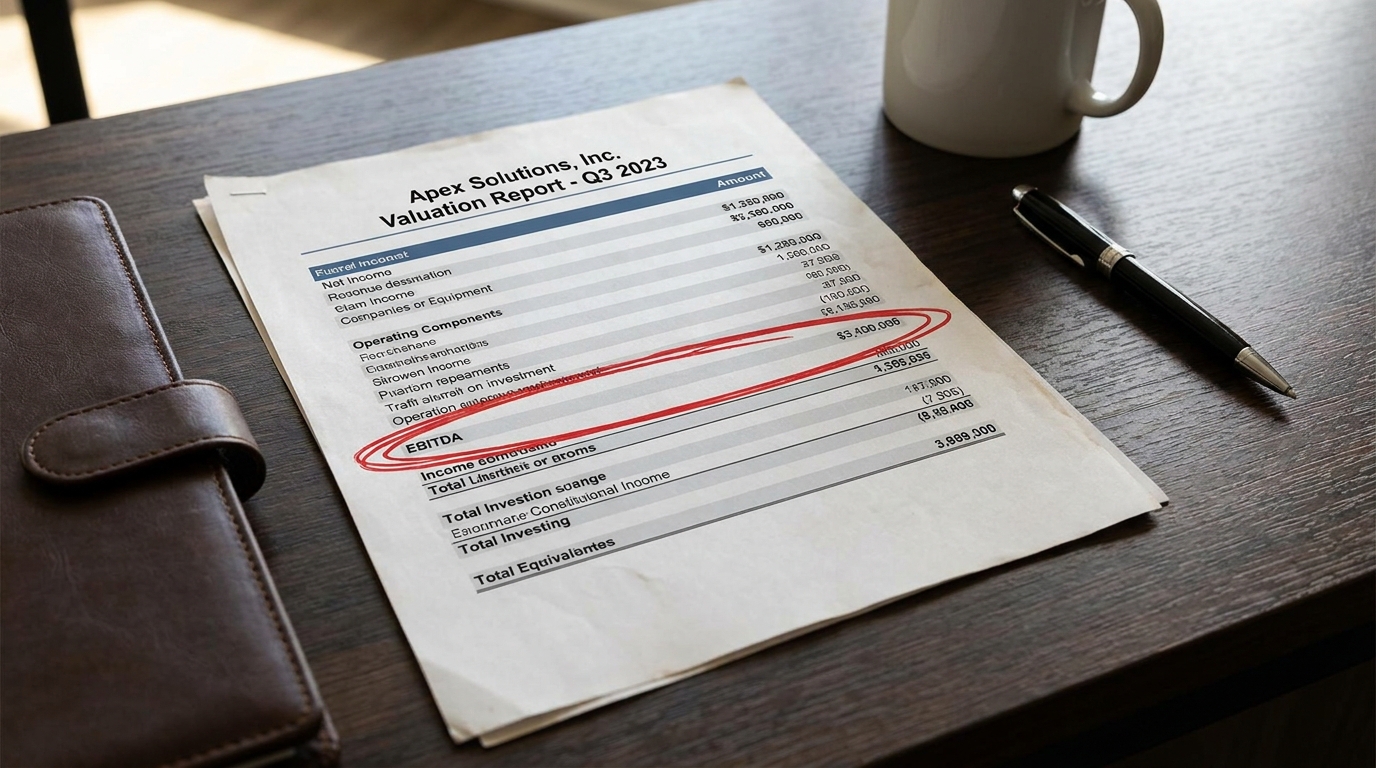
A restoration business diagnostic engagement is a structured assessment of a company’s financial performance, operational systems, and organizational structure, conducted by an outside specialist. The output is a prioritized list of revenue leaks, margin opportunities, and operational fixes — with an estimated dollar impact for each.
The Before: What a $5M Company in Distress Looks Like
The owner called in February. The company had just closed its fiscal year at $5.1M in revenue — a milestone he’d been working toward for six years. The problem: the year had produced approximately $180,000 in net income against revenue that should have generated $400,000+. He’d been profitable. He hadn’t been adequately profitable for the growth and risk he’d taken on. And he couldn’t identify why.
The presenting symptoms before the diagnostic began: cash consistently tight in months 3 and 4 of each quarter; job cost reports showing wide margin variance with no clear pattern; two PMs producing inconsistent results; a contents division that “never seemed to make money”; AR aging that had crept to 38% over-60 over the prior 18 months; and an owner who was working 65 hours per week and still felt behind.
This is a recognizable portrait. Revenue milestone achieved. Owner burned out. Margins thinner than the growth deserves. The sense that something is wrong but nothing is clearly broken enough to fix. This is the company the Profit Detective diagnostic is designed for.
Week One: The Diagnostic Findings
The diagnostic week produced a prioritized findings list with estimated dollar impacts. In order of magnitude:
Finding 1: Subcontractor markup absent on 60% of reconstruction jobs. The company was applying markup inconsistently — some estimators used it, one didn’t. At $1.3M in annual sub billings, the missing markup on 60% of jobs represented approximately $156,000 in annual revenue gap. Dollar impact: $156,000.
Finding 2: Contents division operating at a loss. Standalone P&L analysis revealed the contents division was losing approximately $48,000 per year after full cost allocation, subsidized invisibly by mitigation margins. Dollar impact: $48,000 (elimination of loss) plus $35,000 in pricing adjustment opportunity.
Finding 3: AR collection process inadequate for the account size. $312,000 in over-60 AR with no active collection protocol beyond automated statements. Dollar impact: not a revenue gain but a working capital improvement of approximately $150,000 in collected AR within 60 days.
Finding 4: One PM running 12 points below company average margin. On $1.1M of annual job volume handled by this PM, the 12-point variance represented approximately $132,000 in recoverable margin. Dollar impact: $132,000 if margin is corrected to company average.
Finding 5: Owner bottleneck limiting growth capacity. Non-financial but capacity-limiting. Estimated impact: 15–20% growth capacity unlocked if delegation structure is implemented.
The After: 90 Days Later
Subcontractor markup: Implemented consistently across all estimators. First 90-day billing improvement: $38,000 in incremental markup revenue on completed jobs. Annual run rate: $156,000.
Contents division: Rebuilt cost structure, implemented monthly storage billing, repriced cleaning rates by item type. Contents division moved from $48,000 loss to approximately break-even in 90 days. Full profitability expected in months 4–6 as pricing takes full effect.
AR collection: $198,000 collected from over-60 accounts in first 45 days. Credit line balance reduced by $140,000. Owner made payroll without a credit line draw for the first time in fourteen months.
PM performance: Variance analysis presented to underperforming PM with specific line item coaching. Margin moved from 29% to 36% in first 90 days. Not fully corrected yet, but trajectory established.
Owner delegation: Decision authority framework implemented. Owner’s daily decision volume reduced by approximately 55%. Three new jobs accepted and executed within the first month that would previously have required owner involvement at every stage.
Overall 90-day financial impact: Approximately $236,000 in combined revenue improvement, cost correction, and working capital recovery. The company entered the next fiscal quarter with a clearer financial picture, a working capital reserve, and a set of systems that would continue generating improvement beyond the engagement.
What the Engagement Process Actually Looks Like
Week one is diagnostic: financial review, job cost analysis, operational observation, and a prioritized findings document. Weeks two through twelve are implementation: working through the findings list in priority order, building the systems and protocols that fix each issue, and reviewing results. The engagement isn’t consulting in the abstract sense — it’s specific fixes to specific identified problems, tracked against specific expected outcomes.
The owner’s role is to engage honestly and implement what’s identified. The advisor’s role is to find the problems, design the fixes, and hold the accountability structure. Most engagements produce their most significant financial impact in the first 60–90 days — because the highest-impact fixes are almost always operational rather than strategic, and operational fixes can be implemented quickly.
FAQ: Restoration Business Diagnostic Engagement
What does a restoration business diagnostic engagement typically reveal?
Most diagnostics reveal 3–6 significant findings across the financial, operational, and organizational dimensions of the business. Common categories: billing practices that suppress revenue (missing markup, incomplete billing), AR collection failures that compress working capital, job cost variance patterns by PM or service line, divisional P&L problems hidden in blended financials, and organizational structures that create owner bottleneck. The specific combination varies; the pattern of findable, fixable problems is remarkably consistent.
How long does a Profit Detective diagnostic engagement take?
The diagnostic week is five days: financial review, job cost analysis, operational observation, and findings presentation. Implementation engagements typically run 90 days — long enough to implement the highest-priority fixes, validate the financial impact, and build the systems that sustain improvement after the engagement ends. Some engagements extend to 6 months for companies with deeper organizational challenges.
What financial metrics improve most commonly after a restoration business diagnostic?
In frequency order: gross margin improvement (through billing corrections and cost controls), working capital improvement (through AR collection and billing cadence), EBITDA improvement (through both margin and cost correction), and credit line reduction (as working capital improves). Revenue typically doesn’t improve in the first 90 days — the engagement improves what the company earns on its existing revenue, not the revenue volume itself.
What does a restoration business diagnostic cost relative to the ROI?
Diagnostic engagement fees vary with company size and engagement scope. The relevant comparison is the dollar impact of findings versus the engagement cost. At a company like the one described above — $5M in revenue — the first 90-day financial impact of $236,000 against an engagement fee structure designed for companies of that size produces a meaningful positive ROI within the engagement window. If an engagement doesn’t find more value than it costs within 90 days, something is wrong with either the company’s problems or the diagnostic.
How quickly can a restoration owner expect to see results from a diagnostic engagement?
The highest-impact fixes are typically operational and implement quickly. AR collection improvements show results within 30–45 days. Billing practice corrections show results on the first jobs closed after implementation — often within 30 days. PM performance coaching shows statistical improvement within 60–90 days as the habit change takes hold. Working capital stabilization is typically visible within 60 days. The engagement produces a compound effect: each fix builds working capital and management capacity for the next one.
Mike McCabe is a restoration business consultant and the founder of Profit Detective. He works with restoration operators to find and fix the margin leaks that don’t show up until it’s too late.