The 10 KPIs Every Restoration Company Owner Must Track
May 1, 2026
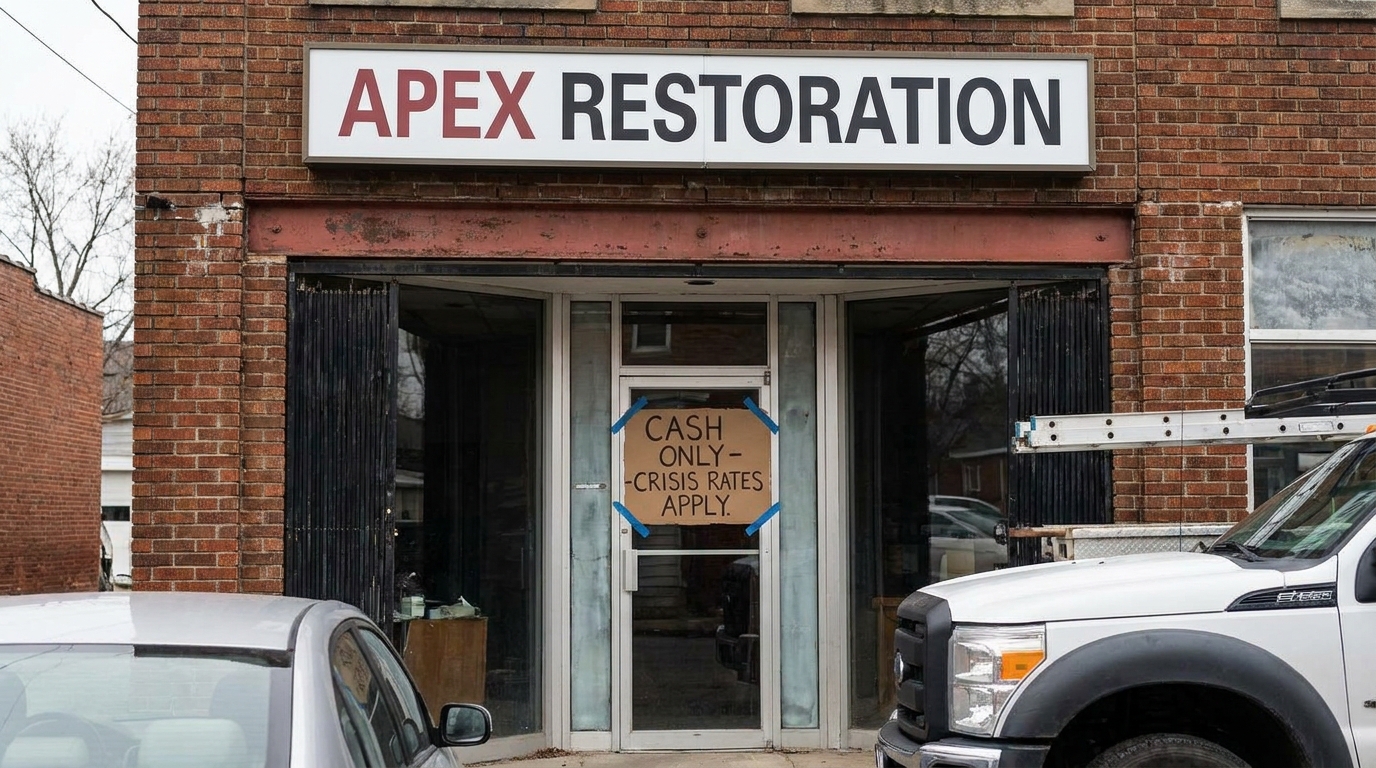
What KPIs should a restoration company track? Restoration companies should track gross margin by service type, overhead ratio, job cycle time, collection days on TPA receivables, technician utilization, close rate by lead source, estimate-to-invoice variance, call response time, customer satisfaction score, and monthly recurring commercial revenue. These 10 metrics provide a complete operational and financial picture.
Revenue is a vanity metric. A restoration company doing $3M in revenue with 15% net margin is generating $450,000 in profit. A company doing $4M with 8% net margin is generating $320,000. More revenue, less money. If you’re only tracking revenue, you’re flying blind.
The 10 KPIs
1. Gross Margin by Service Type
Target: Water mitigation 60–75%, mold remediation 55–65%, fire restoration 45–60%, reconstruction 35–45%. If you can’t calculate gross margin by service type, you don’t know which jobs are making you money.
2. Overhead Ratio
Target: 22–28% of revenue. This is your fixed and semi-fixed cost burden. Above 30% is a warning sign unless you’re in an active growth investment phase.
3. Job Cycle Time
Target: Water mitigation 3–5 days average dry time. The faster jobs close, the faster cash comes in and equipment returns to the field. Track average cycle time monthly and by crew.
4. TPA Collection Days
Target: Under 45 days average. TPA payment delays are the most common cash flow constraint in restoration. Track average days from invoice to payment by TPA. Chronic late payers need to be addressed directly.
5. Technician Utilization Rate
Target: 70–80% of available field hours on billable work. Below 60% means you’re paying for idle capacity. Above 85% means you’re at risk of burning out your crew or turning down work.
6. Close Rate by Lead Source
Track how many estimates you write per lead source and what percentage close. TPA dispatches and emergency residential calls typically close at 70–90%. Competitively bid commercial work closes at 20–40%. Knowing your close rates helps you allocate estimating time correctly.
7. Estimate-to-Invoice Variance
Target: Final invoice within 15% of original estimate (excluding documented supplements). Large variance indicates estimating quality problems — scope misses that either cost you margin or create adjuster disputes.
8. Emergency Response Time
Target: On-site within 2 hours for emergency residential calls. Response time is the single most important factor in residential close rate and customer satisfaction. Track it every week.
9. Customer Satisfaction Score
Track Google review score and volume, post-job survey NPS, and referral rate. Reputation is your most valuable business development asset in restoration.
10. Monthly Recurring Commercial Revenue
Track the revenue generated from established commercial accounts — facility management relationships, property management companies, commercial carriers — as a percentage of total revenue. Growing this number reduces revenue volatility and TPA dependence.
FAQ
What is a good net profit margin for a restoration company?
A well-run restoration company should generate 12–18% net profit margin. Below 10% signals either margin or overhead problems worth diagnosing. Above 20% is achievable for companies with strong commercial account bases and lean overhead structures.
How do I calculate gross margin for a restoration job?
Gross margin = (Revenue – Direct job costs) / Revenue. Direct job costs include field labor (fully burdened), materials, equipment depreciation or rental, and subcontractors. Overhead costs are not included in gross margin — they’re tracked separately as the overhead ratio.
Mike McCabe is The Profit Detective — a 36-year restoration industry veteran who has built KPI dashboards and financial diagnostic frameworks for 150+ restoration companies across North America.